
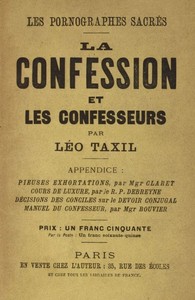
Les pornographes sacrés: La confession et les confesseurs by Léo Taxil
So, what's this book actually about? It's not a novel with a plot. Think of it as a lengthy, aggressive pamphlet. Léo Taxil, a notorious anti-clerical writer, lays out his central claim: that the Catholic sacrament of confession is systematically abused by priests. He argues that confessors methodically question penitents about their most private sexual acts and thoughts under the guise of spiritual guidance. Taxil presents this as an organized, secret system where this collected 'pornographic' information is used to manipulate and control the faithful, tying them closer to the Church's power.
Why You Should Read It
Reading this is a trip. It's a raw look into a very specific kind of historical rage. You're not getting a balanced argument; you're getting a polemic, a weapon made of words. The 'insight' here isn't into the truth of the claims, but into the mind of a master provocateur and the intense political-religious battles of 19th-century France. It's fascinating to see how old some modern anti-institutional arguments really are. The book forces you to be a critical reader, to constantly ask: Is this a brave exposure of abuse, or is it the foundation of a dangerous conspiracy theory? That tension is electrifying.
Final Verdict
This is not for everyone. It's a challenging, uncomfortable, and often infuriating read. But if you're a history nerd fascinated by propaganda, the roots of modern anti-Catholic rhetoric, or the career of one of history's great hoaxers, it's essential. Perfect for readers who enjoy primary sources that show history's messy, argumentative underbelly, not just the polished summaries. Approach it not as truth, but as a historical artifact of distrust.
This publication is available for unrestricted use. Enjoy reading and sharing without restrictions.
Ava Clark
1 year agoUsed this for my thesis, incredibly useful.





Lucas Thomas
1 year agoHelped me clear up some confusion on the topic.